TL;DR
One machine weaves one horizontal opening. The vertical opening is fine-tunable, the horizontal opening is set by the forming tooling, and “doubling” gives you exactly 2×H — a two-position step, not a dial.
Quote your spec as H × V + twist length, in millimetres, every time. “60×80” is a trade card, not a drawing. The supplier who builds to the card and the buyer who inspects to the drawing are the ones who end up in rework.
Compare lines by m² per shift at your spec — and you can compute it yourself: openings/min × advance per opening (V + t) × working width. One published spec sheet quotes metres of mesh per hour where it means square metres — a 4.3× error against its own machine.
Who this is for: mesh producers and importers investing in double-twisted hexagonal weaving capacity for flood control, river training and gabion structures.
1. Where the demand is coming from
Public water infrastructure is funded and moving across the Middle East, South Asia, Africa and South America. These are the commitments worth tracking right now:
| Market | What has actually been funded or awarded |
|---|---|
| UAE — Dubai | The “Tasreef” stormwater programme — AED 30 bn (~US$8.2 bn) to raise rainwater drainage capacity (Gulf Construction); a further AED 2.5 bn across five drainage contracts awarded in February 2026 (Dubai Media Office) |
| India — Assam | US$182 m ADB loan approved to scale up flood and erosion management along the Brahmaputra (ADB) |
| Indonesia — Bekasi River | Embankment programme planned along the Bekasi (Antara); West Java’s Bogor–Bekasi normalisation has embankment works alone costed at Rp 3.6 tn (~US$220 m) (Radar Bogor) |
| Indonesia — Banten | Rp 821 bn (~US$49 m) earmarked for river normalisation and flood control (Antara) |
| Brazil | R$ 4.47 bn being applied to basin revitalisation through river-basin committees (Ministry of Regional Development) |
| Nigeria | N50 bn flood and gully-erosion contracts signed under ACReSAL (FMEnv); a further N83.2 bn flood-mitigation fund approved by the National Economic Council (Guardian NG) |
What all of it buys, on site, is the same four things:
Flood control and river training — bank revetment, spur dikes, toe protection. Gabion boxes and Reno mattresses install in fast water and beat riprap and masonry on installed cost.
Ecological bank protection — permeable structures relieve pore pressure and let vegetation root; mattresses with topsoil are now the default spec on many small and medium rivers.
Mountain flood control and soil conservation — check dams and debris barriers, cheap to transport, quick to build, easy to repair after a flood.
Urban drainage and resilience — channels, retention ponds, waterfronts.
A caveat worth stating: we deliberately do not convert these budgets into “X million m² of mesh”. The mesh intensity of a scheme varies by roughly 5× between a mattress-heavy river job and a box-heavy retaining wall. If you want volume, ask your buyer for the bill of quantities — it is the only number that survives contact with the tender.
The demand signal is real. What decides whether you can serve it is the machine spec — which is where most purchases go wrong.
2. The tender label is not a production spec
Tender documents and trade listings use shorthand: 60×80, 80×100, 100×120 mm. Your drawing cannot be shorthand, because the machine is tooled to the drawing and the buyer inspects against it.
Two different numbers hide inside every mesh size:
-
H — horizontal opening (across the double twist). Set by the forming tooling.
-
V — vertical opening. Fine-tunable within a small range.
-
t — twist length. How long the double-twisted section is: typically 35–50 mm on 3-twist and 45–70 mm on 5-twist, set per order.
Write it out in full, in millimetres:
H 80 × V 100 + t e.g. H 80 × V 100 + 35
⚠️ Unit trap. If a supplier quotes “H 6.6 × V 10 + 5”, ask which unit. In a 1.0–4.0 mm wire, a 10 mm vertical opening is not gabion mesh — that notation is centimetres, or it belongs to a different product. Two quotes in different units have never once been comparable. Fix the unit before you fix the price.
Twist length ≠ twist count
These get confused constantly, and getting it wrong means rework on a full shift’s output:
| Parameter | What it is | Who sets it |
|---|---|---|
| Twist length (t) | How long the double-twist section runs, in mm | Per order — it is a dimension on your drawing |
| Twist count | 3-twist, 5-twist, or alternating 3/5 — how many wire turns sit at each joint | A machine function, selectable |
They are independent parameters. A 5-twist machine can run any twist length its tooling is set for, and a customer asking for “5-twist” is saying nothing about the twist length.
Twist length is a throughput number as well. The mesh advances by V + t on every weave cycle, so an H 80 × V 100 + 50 spec moves the mesh 150 mm per stroke — the 50 mm twist is a third of the pitch, and a third of the output. Two quotes that both say “80 × 100” can differ by 15% on capacity purely because one of them left the number after the plus sign off the sheet. Ask for it before you ask for a price — the +50 used in the capacity table below sits near the top of the 3-twist range (35–50 mm), so it is a fair but not a conservative example.
What buyers actually order
| Parameter | Typical range |
|---|---|
| Mesh opening | Exact H × V + twist length, e.g. H 80 × V 100 + t |
| Wire diameter | 1.0 – 4.0 mm |
| Coating | Galvanised, Galfan (Zn-5Al-MM), or PVC |
| Twist type | 3-twist, 5-twist, alternating 3/5 |
| Product form | Gabion box 1–4 m long; Reno mattress 0.15–0.30 m thick |
Two details decide service life, and both are specified more often than they used to be: the double twist stops the mesh unravelling when a single wire fails, and Galfan or PVC coating is now written into corrosive and long-life schemes.
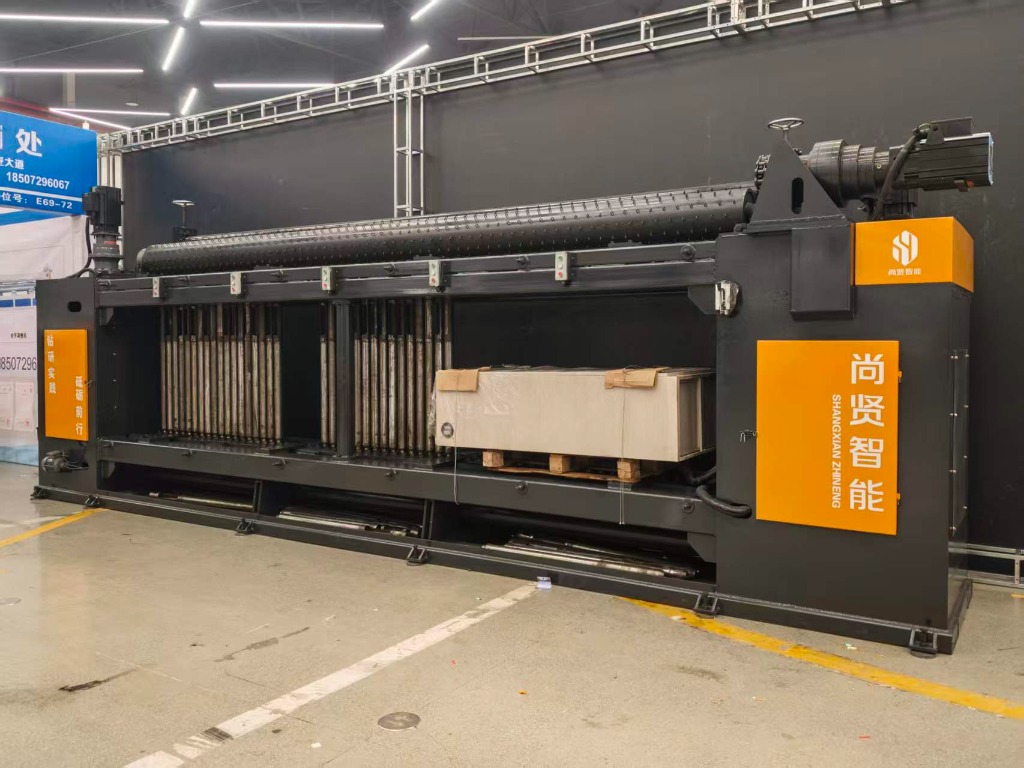
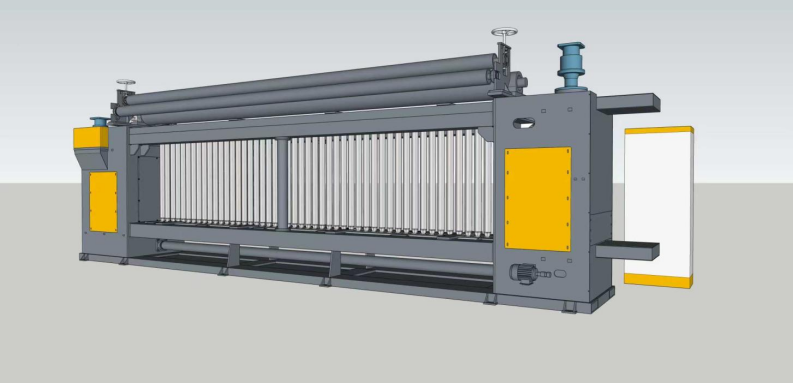
Every parameter in this section is set per order on the CNC gabion mesh weaving machine: H follows your forming tooling, V is adjusted, t is built to your drawing.
3. The decision most producers get wrong: one machine is not every opening
There is no universal gabion weaving machine. Here is exactly how far the flexibility goes:
| Function | How adjustable is it? | What it means for a quote |
|---|---|---|
| Vertical opening (V) | Fine-tunable in a small range | One machine can cover a family of heights |
| Horizontal opening (H) | Set by the forming tooling — change H, change tooling | Different H means either a tooling change or a second machine |
| Doubling | Two half-gear positions: nominal H, or 2×H | A discrete step, not continuous adjustment |
| Twist count | 3 / 5 / alternating, selectable | Independent of doubling |
So “can one machine do 60×80 and 120×150?” has a precise answer: yes, if H differs by exactly 2 (60 → 120) and the vertical setting and wire range still overlap. For any other pair — say 80×100 and 100×120 — you are changing tooling or buying a second line.
That changes the buying question from “which machine?” to “which spec mix?”:
-
Which H × V specs will you actually produce? Take the ones that recur in local tenders and in your export enquiries. Two or three, not ten.
-
Do any two of them differ by exactly 2× in H? If so, one doubling-capable machine covers both openings — and the machine count drops.
-
What wire range and working width do those specs need? Width up to 5600 mm is standard, configured per order.
Answer those three and the machine count — and the budget — falls out of them. Skip them and you buy a line that cannot weave the spec you win next month.
4. Turning your target m²/day into a machine count
This is the calculation almost no supplier shows you, and it is the one that decides payback.
One speed figure, three inputs
A gabion line’s speed is set by how many mesh openings it weaves per minute — not by how many times the drive strokes. On our machine two strokes make one opening, so the 90 strokes/min on the nameplate is 45 openings/min at 3-twist, and 76 strokes is 38 at 5-twist. Ask for the openings figure explicitly: on a machine where one stroke equals one opening, the same “90” means twice the speed, and nothing on the nameplate tells you which machine you are looking at.
The pitch then sets how far the mesh moves per opening, so the same openings per minute gives you different metres per hour on different specs:
advance speed v (m/h) = openings/min × advance per opening (m) × 60
gross output (m²/h) = working width W (m) × v
net output (m²/shift) = gross × OEE × hours
On our machine the pitch is V + t — the vertical opening plus the twist length. On an H 80 × V 100 + 50 spec that is 150 mm, so 45 openings/min is 6.75 m/min, or 405 m/h of mesh. The same line therefore produces more square metres rolling 100×120 than rolling 60×80, and more rolling a longer twist. Any supplier quoting a single m²/h figure without naming H × V and the twist length has not done the arithmetic.
OEE covers the stops: wire breaks, coil changes, jam clearing, splices, tooling checks. 0.75–0.85 is a fair planning range for a well-run line; use 0.80 until you have your own data.
One published sheet multiplies by nothing
Here is the error that actually gets made. A heavy 4.3 m machine’s table lists 25 strokes/min and then quotes output as 165 / 195 / 225 against its 60×80, 80×100 and 100×120 rows. Divide each of those by 25 strokes/min and by 60 minutes and you get exactly 110, 130 and 150 mm — each vertical opening plus a 30 mm twist. So the sheet took one stroke as one opening and assumed t = 30 mm — and the three numbers are metres of mesh per hour, not square metres per hour: the 4.3 m working width was never multiplied in, and the sheet understates its own machine by 4.3×. Two columns earlier the same table also prints a mesh advance of 25 m/h, which disagrees with its own speed column by eight times.
Read that way the sheet is not lying — it is publishing its assumptions. So ask two questions in this order: is that metres or square metres, and what width was it measured at? Then do the multiplication the supplier left out — 195 m/h × 4.3 m = 840 m²/h — and you have a number you can hold him to, and compare with anyone else’s. A buyer who can do that arithmetic can read what a supplier actually meant. After that, ask for the one figure nobody can copy off a competitor: a one-hour run at your spec with the counter visible.
Capacity table
Implied by the loaded weaving speed, 5.6 m working width, OEE 0.80, 8-hour shift (6.4 productive hours):
| Spec (pitch = V + t) | 3-twist advance | 3-twist m²/shift | 5-twist advance | 5-twist m²/shift |
|---|---|---|---|---|
| 60×80 + 50 → 130 mm | 351 m/h | ≈ 12,600 | 296 m/h | ≈ 10,600 |
| 80×100 + 50 → 150 mm | 405 m/h | ≈ 14,500 | 342 m/h | ≈ 12,300 |
| 100×120 + 50 → 170 mm | 459 m/h | ≈ 16,450 | 388 m/h | ≈ 13,900 |
Two things fall out of that table which buyers rarely connect:
A finer spec runs slower. At the same speed setting, 60×80 yields about 13% less mesh per shift than 80×100, and a quarter less than 100×120 — the pitch is shorter. Plan the product mix before you plan the capacity.
Width and speed multiply. At 80×100 with 3-twist, a 4.3 m line plans at roughly 11,100 m²/shift against 14,500 on a 5.6 m line.
Every row of that table is a figure we plan to on the model we build — and we will run it on your spec before you commit, so you can check the arithmetic instead of taking it.
Cross-check it against your coil tally
Don’t take the table on faith — it is checkable from wire consumption. One square metre of 80×100 in 3.0 mm wire weighs roughly 1.5 kg (your coil tally will give the exact figure for your wire and coating), so 2,300 m²/h means about 3.4 t of coil going in per hour — a one-tonne coil every 18 minutes.
Two consequences. First, if a supplier’s claimed output and his coil tally disagree by more than 20%, one of the two is wrong — find out which before you wire a deposit. This check has killed more bad machine purchases than any brochure comparison. Second, a line this fast is limited by wire supply long before it is limited by motor power: plan a two-post let-off and jumbo coils, because hand-loading a one-tonne coil every 18 minutes will pull your real OEE back down. That is the difference between a demonstration and a production line.
Reverse it from your order book
Say you need to deliver 100,000 m² of 60×80 + 50 (130 mm pitch):
5.6 m line at 45 openings/min: 100,000 ÷ 12,600 ≈ 8 shifts — under two working weeks on one shift.
4.3 m line at 25 strokes/min: 25 × 0.13 m × 60 = 195 m/h → 4.3 m × 195 × 0.8 ≈ 670 m²/h effective → ≈ 5,400 m² per shift → 19 shifts, nearly four weeks.
Same order, same steel price, about 2.4× the delivery speed. The machine count follows:
machines needed = annual volume ÷ (net m² per shift × shifts per week × working weeks)
The three questions to ask before you wire a deposit
-
“Run my spec for one hour and show me the counter.” A video of a full hour at your H × V, with the length counter visible, is worth more than any nameplate.
-
“How many stops per shift, and what causes them?” Ask for the top three causes. A supplier who cannot name them has not watched their own machine run.
-
“What is the scrap rate at my wire diameter?” Too-thin wire at high speed is where the rework lives.
5. The real bottleneck is uptime, not headline price
A line that stops twice a shift loses more than a slower line that never stops. Most production loss is unplanned: wire breaks, jams, twist inconsistency, coil changes.
A production-grade CNC gabion line is built around three things:
Throughput — servo-driven feed and pitch; our CNC model runs 90 drive strokes/min loaded at 3-twist, which is 45 openings/min, and 76 strokes at 5-twist, which is 38 — at 80×100 + 50 that is 405 m of mesh per hour.
Low failure rate — stress-relieved one-piece beam, carburised 20CrMnTi gears, centralised lubrication.
CNC precision — PLC + HMI settings, length counting, auto-stop and alarm, so a wire break stops the line at the exact length instead of 20 m later.
Judge a line on the third one hardest. Auto-stop is what turns a stoppage into a two-minute fix instead of a two-hour rework.
6. Machine specification
| Item | Value |
|---|---|
| Mesh opening | Built to spec, e.g. H 80 × V 100 + t |
| Doubling function | Doubles horizontal opening (2 × H) |
| Vertical opening | Fine-tunable |
| Twist length | Set per order — 35–50 mm on 3-twist, 45–70 mm on 5-twist; independent of twist count |
| Max. mesh width | 5600 mm standard, configured per order |
| Wire diameter | 1.0 – 4.0 mm |
| Weaving speed | 90 drive strokes/min = 45 openings/min, loaded (3-twist) · 76 strokes = 38 openings (5-twist); one V + t opening advanced per opening — ≈ 405 m/h of mesh at 80×100 + 50 |
| Motor power | 52 kW |
| Weight | 17 t |
| Control | PLC + HMI, servo feed and pitch |
| Twist functions | 3 / 5 / alternating, independent of doubling |
| Power supply | 380 V / 50 Hz 3-phase, or local standard |
| Warranty | 12 months |
| Commissioning | On-site installation and operator training included |
7. Why the window is open now
The money is already appropriated. Water budgets are multi-year commitments, not annual discretionary spend — the contracts in §1 are signed, which is a very different signal from an announced programme.
Local supply wins on logistics. Gabion mesh is bulky and cheap per tonne; freight and lead time favour in-country weaving, and tenders increasingly prefer local delivery.
The specs are tradeable. EN 10223-3 and ASTM A975 mean the same mesh can be sold into more than one market — a hedge against any single country’s budget cycle.
8. FAQ
Can one machine weave 60×80 and 80×100?
Only through tooling. H is set by the forming tooling, so 60 and 80 are different setups. The one free case is when H differs by exactly 2 (60 → 120): the doubling function covers both openings without a tooling change — provided the vertical setting and wire range still match.
Is doubling continuous?
No. It is two half-gear positions — nominal H or 2×H. You cannot dial your way to 1.5×H.
Can the same machine run 3-twist and 5-twist?
Yes on machines with selectable twist functions. Twist count is independent of doubling and of twist length.
What is the difference between twist length and twist count?
Twist length is a dimension — how long the double-twist section runs, in mm, set per order. Twist count is how many wire turns sit at each joint (3 or 5). They are separate parameters and customers confuse them constantly. Typical values: 35–50 mm on 3-twist, 45–70 mm on 5-twist.
How much mesh will one line produce per shift?
Use §4: openings/min × (V + t) in metres × 60 × width × 8 h × 0.80. Our line weaves 45 openings/min loaded at 3-twist, which on a 5.6 m width plans at about 14,500 m² per shift on 80×100 + 50, and about 12,600 on 60×80 + 50. Confirm with a one-hour counter run at your own spec.
What wire diameters can it handle?
1.0 – 4.0 mm, galvanised, Galfan or PVC-coated.
Can you supply wider than 5600 mm?
5600 mm is the standard maximum; wider is configured per order.
9. Next step: send four numbers, get a configuration
Send us these four and we will come back with the exact machine configuration, the tooling you need, and how many lines cover your target spec mix:
-
Exact mesh spec — H × V + twist length, in mm
-
Wire diameter range
-
Working width
-
Target output — m² per 8-hour shift (or per day)
What you get back, normally within 12 working hours:
a one-page spec sheet for your opening
2–3 machine configurations with the tooling each needs
the throughput calculation above, run on your numbers, so you can check our arithmetic
👉 Contact form · CNC gabion mesh weaving machine
WhatsApp: +86 175 3189 1768
Prefer to talk it through? Ask for a 30-minute selection call — bring your tender documents and we will read the spec together.
Sources
-
Gulf Construction — Dubai launches $8bn project to boost rainwater drainage capacity: https://www.gulfconstructiononline.com/ArticleTA/287048/dubai-launches-%248bn-project-to-boost-rainwater-drainage-capacity
-
Dubai Media Office — Dubai Municipality awards 5 contracts worth AED2.5 billion under Tasreef: https://cd1.mediaoffice.ae/en/news/2026/february/26-02/dubai-municipality-awards-5-contracts-worth
-
Asian Development Bank — ADB approves $182 million loan for flood and erosion management along the Brahmaputra in Assam: https://www.adb.org/news/adb-approves-182-million-loan-scale-flood-and-erosion-management-along-brahmaputra-assam
-
Antara — Ministry plans embankment on Bekasi River: https://www.antaranews.com/berita/4716885/kemen-pu-siap-bangun-tanggul-di-kali-bekasi-guna-mitigasi-banjir-jabar
-
Antara — Banten to spend $49 mln on river normalization for flood control: https://en.antaranews.com/news/397705/banten-to-spend-49-mln-on-river-normalization-for-flood-control
-
Brazilian Ministry of Regional Development — R$ 4.47 billion applied to basin revitalisation: https://www.gov.br/mdr/pt-br/noticias/criacao-de-comites-gestores-fortalece-a-aplicacao-de-r-4-47-bilhoes-em-acoes-de-revitalizacao-de-bacias-hidrograficas
-
Federal Ministry of Environment (Nigeria) — N50bn flood and gully control contracts under ACReSAL: https://fmino.gov.ng/kdsg-and-acresal-represented-state-project-management-unit-signs-contracts-over-n50bn-for-major-flood-and-gully-control-projects/
-
The Guardian (Nigeria) — NEC approves N83.2bn flood mitigation fund: https://guardian.ng/news/shettima-demands-results-from-reforms-as-nec-approves-n83-2bn-flood-mitigation-fund/
摘要
一台机器只织一种横向网孔。 竖向网孔可以小幅微调,横向网孔由成型模具决定;“双倍孔”给你的正好是 2×H——是两个档位,不是无级调节。
写规格永远写全:横向 H × 竖向 V + 拧花长度,单位毫米。 “60×80” 是行业口头牌价,不是图纸。按口头牌价造机器的供应商,和按图纸验货的买家,最后都掉进返工里。
比较产线,要比“按你自己的规格算出来的 m²/班”——而这个数你自己就能算: 孔/分 × 每孔前进量(V + t) × 有效幅宽。有一份公开参数表把“米/小时”写成了“平方米/小时”,跟它自己机器的真实产能差了 4.3 倍。
本文读者:为防洪、河道治理和格宾结构投资双绞合六边形网生产能力的网片厂家与进口商。
1. 需求从哪里来
公共水利基建的钱已经落地,正在中东、南亚、非洲和南美推进。以下是目前值得盯的实盘项目:
| 市场 | 已实际注资或已授标的内容 |
|---|---|
| 阿联酋 — 迪拜 | “Tasreef” 雨洪排放计划,AED 300 亿(约 82 亿美元)提升雨水排放能力(Gulf Construction);2026 年 2 月又授出五份排水合同共 AED 25 亿(迪拜媒体办公室) |
| 印度 — 阿萨姆邦 | 亚行批准 1.82 亿美元贷款,扩大布拉马普特拉河的防洪与河岸侵蚀治理(ADB) |
| 印尼 — 勿加泗河 | 勿加泗河沿线规划堤防工程(Antara);西爪哇茂物—勿加泗河道整治,仅堤防一项造价 Rp 3.6 万亿(约 2.2 亿美元)(Radar Bogor) |
| 印尼 — 万丹省 | Rp 8210 亿(约 4900 万美元)专项用于河道整治与防洪(Antara) |
| 巴西 | R$ 44.7 亿通过流域委员会投入流域修复(区域发展部) |
| 尼日利亚 | ACReSAL 项目下签署 500 亿奈拉防洪与沟蚀治理合同(联邦环境部);国家经济委员会另批准 832 亿奈拉防洪专项基金(Guardian NG) |
这些钱在工地上买到的,是同四样东西:
防洪与河道治理——护岸、丁坝、坡脚防护。格宾网箱与雷诺护垫能在急流中施工,综合造价优于抛石和浆砌石。
生态护岸——透水结构释放孔隙水压、允许植被扎根;带覆土的护垫已成为许多中小河流的默认做法。
山洪防治与水土保持——拦砂坝、泥石流拦挡坝,运输便宜、施工快、灾后易修复。
城市排涝与韧性建设——渠道、调蓄池、滨水岸线。
一句必须说清的提醒: 我们故意不把这些预算换算成“多少万平方米网片”。同一个工程,护垫为主和网箱为主的网片强度能差约 5 倍。要量,就向买方要工程量清单(BOQ)——那是唯一能活着走到招标环节的数字。
需求信号是真的。决定你接不接得住的是机器规格——而大多数采购恰恰死在这里。
2. 招标牌价不是生产规格
招标文件和贸易名录用简写:60×80、80×100、100×120 mm。你的图纸不能简写,因为机器是按图纸配模具的,而买方是按图纸验货的。
每一个“网孔尺寸”背后都藏着三个数:
-
H——横向网孔(跨过双绞合的那一边),由成型模具决定。
-
V——竖向网孔,可在小范围内微调。
-
t——拧花长度,双绞合段的长度:三拧常见 35–50 mm,五拧 45–70 mm,按订单设定。
完整写出来,单位毫米:
H 80 × V 100 + t 例:H 80 × V 100 + 35
⚠️ 单位陷阱。 如果供应商报“H 6.6 × V 10 + 5”,先问是什么单位。1.0–4.0 mm 丝径下,10 mm 的竖向孔不可能是格宾网——那是厘米制,或者根本是别的产品。两个不同单位的报价,从来没有一次是可比的。先统一单位,再谈价格。
拧花长度 ≠ 拧花道数
这两个天天被混,混错的代价是一整班的产量返工:
| 参数 | 是什么 | 谁定 |
|---|---|---|
| 拧花长度(t) | 双绞合段有多长,单位 mm | 按订单——它是你图纸上的一个尺寸 |
| 拧花道数 | 3 拧、5 拧或 3/5 交替——每个绞合点绕几圈 | 机器功能,可切换 |
两者互相独立。一台 5 拧机可以跑任何模具允许的拧花长度;客户说“要 5 拧”,一个字也没说拧花长度是多少。
拧花长度同时是一个产能数字。 每个织网周期,网面向前走 V + t,所以 H 80 × V 100 + 50 这个规格,每次冲程走 150 mm——那 50 mm 拧花占了节距的三分之一,也就占了产能的三分之一。两份都写“80 × 100”的报价,产能可以差 15%,仅仅因为其中一家把加号后面的数字漏在了表外。问价格之前,先问这个数。——下面产能表里用的 +50,落在 3 拧范围(35–50 mm)的上沿,算是公道但不算保守的例子。
买家实际下单时写什么
| 参数 | 常见范围 |
|---|---|
| 网孔 | 精确写 H × V + 拧花长度,如 H 80 × V 100 + t |
| 丝径 | 1.0 – 4.0 mm |
| 镀层 | 电镀/热镀锌、Galfan(Zn-5Al-MM)或 PVC |
| 拧花类型 | 3 拧、5 拧、3/5 交替 |
| 产品形态 | 网箱长 1–4 m;雷诺护垫厚 0.15–0.30 m |
有两个细节决定使用寿命,而且现在被写进规格的频率越来越高:双绞合让单根钢丝断裂时网面不散开;Galfan 或 PVC 镀层已经写进腐蚀环境和长寿命要求的工程。
本节里的每一个参数,在数控格宾网织网机上都是按订单交付的:H 跟着你的成型模具走,V 靠微调,t 按你的图纸做。
3. 大多数人做错的那个决定:一台机器不等于所有网孔
没有万能格宾网机。 灵活性到底有多大,说清楚:
| 功能 | 可调程度 | 对报价意味着什么 |
|---|---|---|
| 竖向网孔(V) | 小范围内微调 | 一台机可覆盖一组高度 |
| 横向网孔(H) | 由成型模具决定,换 H 就换模具 | 换 H 要么换模具,要么上第二台 |
| 双倍孔 | 两个半齿轮档位:标称 H,或 2×H | 离散的一档,不是连续调节 |
| 拧花道数 | 3 / 5 / 交替,可切换 | 与双倍孔无关 |
所以“一台机能不能同时做 60×80 和 120×150”有精确答案:能,前提是 H 正好差 2 倍(60 → 120),且竖向设定与丝径范围仍然重叠。换成任何其他组合——比如 80×100 和 100×120——你要么换模具,要么买第二条线。
这把采购问题从“选哪台机器”变成了“选哪套规格组合”:
-
你到底要生产哪几个 H × V? 取本地招标和你的出口询盘里反复出现的那两三个,不是十个。
-
其中有没有两个的 H 正好差 2 倍? 有,一台带双倍孔的机器就覆盖两个孔型,机器台数直接降下来。
-
这几套规格需要什么丝径范围和幅宽? 幅宽 5600 mm 是标准上限,按订单配置。
这三个问题答完,机器台数和预算自己就出来了。答不上来,你买的线织不了下个月中标的那批货。
4. 把目标 m²/天 换算成机器台数
这是几乎没有一个供应商愿意给你看的算式,而它决定的正是回本周期。
一个速度数字,三个输入
格宾网线的速度由每分钟织出多少个网孔决定——不是驱动机构冲了多少次。我们这台机器两下一孔,所以铭牌上的 90 次/分,在 3 拧时是 45 孔/分,76 次是 38 孔/分(5 拧)。要明确问对方报的是“孔”还是“次”:如果某台机器一次就是一个孔,同样的“90”就是两倍速度,而铭牌上没有任何东西告诉你差别在哪。
节距接着决定每个孔前进多远,所以同样的孔/分,在不同规格上就是不同的米/小时:
前进速度 v (m/h) = 孔/分 × 每孔前进量 (m) × 60
毛产量 (m²/h) = 有效幅宽 W (m) × v
净产量 (m²/班) = 毛产量 × OEE × 小时数
我们这台机的节距是 V + t——竖向网孔加拧花长度。H 80 × V 100 + 50 就是 150 mm,45 孔/分即 6.75 m/min,也就是每小时 405 米网面。所以同一条线,织 100×120 的平方米数比织 60×80 多,拧花更长也更多。任何只报一个 m²/h 数字、却不说清 H × V 和拧花长度的供应商,都是没算过这道乘法。
OEE 涵盖停机:断丝、换卷、清卡料、接头、查模具。运转良好的产线,规划时取 0.75–0.85;没有自己的数据之前,用 0.80。
有一份公开参数表,什么都没乘
真实会犯的错是这样的。某台 4.3 m 重型机的参数表写着 25 次/分,然后在 60×80、80×100、100×120 三行上分别报 165 / 195 / 225。把这三个数除以 25 次/分、再除以 60 分钟,你得到的正好是 110、130、150 mm——就是各档竖向孔加 30 mm 拧花。也就是说,这张表把“一次”当成“一孔”,并默认 t = 30 mm;而这三个数其实是米/小时的网面长度,不是平方米/小时:那个 4.3 m 幅宽从来没乘进去,这张表把自己的机器少报了 4.3 倍。同一张表往前两列还印着一个“网面前进 25 米/小时”,跟它自己的转速列差八倍。
这样读下来,这张表没撒谎——它只是把自己的假设公开摆出来了。所以按这个顺序问两句:那是米还是平方米?在多大宽幅上量的? 然后把供应商省掉的乘法自己补上——195 m/h × 4.3 m = 840 m²/h——你就有了一个能拿住他、也能拿去跟任何别人比的数字。会做这道乘法的买家,才读得懂供应商到底想说什么。 之后,再问那个谁都抄不走同行广告的数字:在我的规格上跑一小时,把计数器拍给我看。
产能对照表
按带载织网速度、5.6 m 有效幅宽、OEE 0.80、8 小时班(6.4 个有效小时)推算:
| 规格(节距 = V + t) | 3 拧前进速度 | 3 拧 m²/班 | 5 拧前进速度 | 5 拧 m²/班 |
|---|---|---|---|---|
| 60×80 + 50 → 130 mm | 351 m/h | ≈ 12,600 | 296 m/h | ≈ 10,600 |
| 80×100 + 50 → 150 mm | 405 m/h | ≈ 14,500 | 342 m/h | ≈ 12,300 |
| 100×120 + 50 → 170 mm | 459 m/h | ≈ 16,450 | 388 m/h | ≈ 13,900 |
这张表里有两件事,买家很少把它们连起来想:
规格越细,跑得越慢。 同一速度设定下,60×80 每班比 80×100 少约 13%,比 100×120 少四分之一——节距更短。先定产品结构,再定产能。
幅宽和速度是相乘关系。 3 拧、80×100 时,4.3 m 线规划约 11,100 m²/班,5.6 m 线约 14,500 m²/班。
表里每一行,都是我们自己这台机型的规划值——签约之前,我们会用你的规格把它跑一遍,让你核对算术,而不是听我们一句话。
拿你的线圈账对一遍
别凭信任接受这张表——它可以用耗丝量反过来核。80×100、3.0 mm 丝径的网片,每平方米约重 1.5 kg(按你的丝径和镀层,用你自己的线圈账能算出准确值),那么 2,300 m²/h 意味着每小时进线约 3.4 吨——每 18 分钟一卷一吨。
两个推论。第一,如果供应商声称的产量和他的线圈账差超过 20%,两者必有一错——在打定金之前先查清楚是哪一个错了。 这一项检查挡掉的烂机器采购,比任何样本册对比都多。第二,这个速度的线,瓶颈在进线供应上,远比在马达功率上早:要规划双柱放线架和大盘卷,因为每 18 分钟手上一卷一吨,会把你的实际 OEE 直接拽下来。这就是“演示机”和“生产线”的区别。
从订单反推
假设你要交付 100,000 m² 的 60×80 + 50(节距 130 mm):
5.6 m 线,45 孔/分: 100,000 ÷ 12,600 ≈ 8 个班——单班不到两周。
4.3 m 线,25 次/分: 25 × 0.13 m × 60 = 195 m/h → 4.3 m × 195 × 0.8 ≈ 670 m²/h 有效 → 约 5,400 m²/班 → 19 个班,接近四周。
同一张订单、同一个钢价,交付速度差约 2.4 倍。机器台数就从这里出来:
所需台数 = 年产量 ÷(每班净 m² × 每周班次 × 年工作周数)
打定金之前,问这三句
-
“用我的规格跑一小时,把计数器给我看。” 一段完整一小时的、在你 H × V 上的、带长度计数器的视频,比任何铭牌都值钱。
-
“一个班停几次,什么原因?” 让他说出前三项原因。说不出来的供应商,没看过自己的机器跑。
-
“我这个丝径的废品率多少?” 细丝跑高速,返工就藏在这里。
5. 真正的瓶颈是开机率,不是标价
一班停两次的线,亏得比一台慢但不停的线更多。生产损失大多是非计划性的:断丝、卡料、拧花不均、换卷。
一台生产级数控格宾网机是围绕三件事造的:
产能——伺服送料与节距控制;我们的数控机型带载 90 次/分(3 拧),即 45 孔/分,5 拧时 76 次即 38 孔/分——在 80×100 + 50 上就是每小时 405 米网面。
低故障率——去应力整体机架、20CrMnTi 渗碳齿轮、集中润滑。
数控精度——PLC + 触摸屏设定、计长、断丝自动停机报警,断丝就停在准确长度上,而不是再跑 20 米。
第三条要用最挑剔的眼光看。自动停机,是把一次故障变成两分钟修理、而不是两小时返工的那件事。
6. 机器参数
| 项目 | 参数 |
|---|---|
| 网孔 | 按规格定制,如 H 80 × V 100 + t |
| 双倍孔功能 | 横向网孔加倍(2 × H) |
| 竖向网孔 | 可微调 |
| 拧花长度 | 按订单设定——三拧 35–50 mm,五拧 45–70 mm;与拧花道数无关 |
| 最大网宽 | 标准 5600 mm,可按订单配置 |
| 丝径 | 1.0 – 4.0 mm |
| 织网速度 | 带载 90 次/分 = 45 孔/分(3 拧)· 76 次 = 38 孔/分(5 拧);每个网孔前进 V + t——80×100 + 50 时约 405 m/h 网面 |
| 电机功率 | 52 kW |
| 整机重量 | 17 t |
| 控制 | PLC + 触摸屏,伺服送料与节距 |
| 拧花功能 | 3 / 5 / 交替,与双倍孔相互独立 |
| 电源 | 380 V / 50 Hz 三相,或按当地标准 |
| 保修 | 12 个月 |
| 安装 | 含现场安装与操作培训 |
7. 为什么现在是窗口期
钱已经批下来了。 水利预算是多年期承诺,不是年度可自由削减的支出——第 1 节里那些合同是已签署的,这和“宣布了一个计划”是完全不同的信号。
本地供货赢在物流。 格宾网体积大、单吨价值低,运费和交期都利于本土织网,招标也越来越倾向本地交付。
规格是可通用的。 EN 10223-3 和 ASTM A975 意味着同一张网可以卖进多个市场——是对任何单一国家预算周期的对冲。
8. 常见问题
一台机器能做 60×80 和 80×100 吗?
只能靠换模具。H 由成型模具决定,60 和 80 是两套不同的装法。唯一“免费”的情况是 H 正好差 2 倍(60 → 120):双倍孔功能不用换模具就覆盖两个孔型——前提是竖向设定和丝径范围仍然对得上。
双倍孔是连续可调的吗?
不是。它是两个半齿轮档位——标称 H,或者 2×H。你没法调到 1.5×H。
同一台机器能跑 3 拧和 5 拧吗?
能,带拧花切换功能的机型可以。拧花道数与双倍孔、与拧花长度都互不相关。
拧花长度和拧花道数有什么区别?
拧花长度是一个尺寸——双绞合段有多长,单位 mm,按订单设定。拧花道数是每个绞合点绕几圈(3 或 5)。这是两个独立参数,客户天天把它们搞混。常见取值:三拧 35–50 mm,五拧 45–70 mm。
一条线一个班能出多少网?
用第 4 节的算式:孔/分 ×(V + t)米 × 60 × 幅宽 × 8 小时 × 0.80。我们的线带载 45 孔/分(3 拧),5.6 m 幅宽下,80×100 + 50 一个班规划约 14,500 m²,60×80 + 50 约 12,600 m²。最后请用你自己的规格跑一小时计数来确认。
能处理多大丝径?
1.0 – 4.0 mm,镀锌、Galfan 或 PVC 覆塑。
能做得比 5600 mm 更宽吗?
5600 mm 是标准上限,更宽按订单配置。
9. 下一步:发四个数,拿一份配置方案
把下面四个数发给我们,我们会给出确切的机器配置、需要的模具,以及覆盖你这套规格组合需要几条线:
-
精确网孔规格——H × V + 拧花长度,单位 mm
-
丝径范围
-
有效幅宽
-
目标产量——每 8 小时班(或每天)多少 m²
通常在 12 个工作小时内,你会收到:
针对你这个孔型的一页式规格书
2–3 套机器配置,以及各自需要的模具
上面那套产能换算,用你的数字跑一遍,方便你核对我们的算术
👉 联系表单 · 数控格宾网织网机
WhatsApp:+86 175 3189 1768
更想聊一遍?约一次 30 分钟的选型通话——带上你的招标文件,我们一起读规格。
资料来源
-
Gulf Construction — Dubai launches $8bn project to boost rainwater drainage capacity: https://www.gulfconstructiononline.com/ArticleTA/287048/dubai-launches-%248bn-project-to-boost-rainwater-drainage-capacity
-
迪拜媒体办公室 — Dubai Municipality awards 5 contracts worth AED2.5 billion under Tasreef: https://cd1.mediaoffice.ae/en/news/2026/february/26-02/dubai-municipality-awards-5-contracts-worth
-
亚洲开发银行 — ADB approves $182 million loan for flood and erosion management along the Brahmaputra in Assam: https://www.adb.org/news/adb-approves-182-million-loan-scale-flood-and-erosion-management-along-brahmaputra-assam
-
Antara — Ministry plans embankment on Bekasi River: https://www.antaranews.com/berita/4716885/kemen-pu-siap-bangun-tanggul-di-kali-bekasi-guna-mitigasi-banjir-jabar
-
Antara — Banten to spend $49 mln on river normalization for flood control: https://en.antaranews.com/news/397705/banten-to-spend-49-mln-on-river-normalization-for-flood-control
-
巴西区域发展部 — R$ 4.47 billion applied to basin revitalisation: https://www.gov.br/mdr/pt-br/noticias/criacao-de-comites-gestores-fortalece-a-aplicacao-de-r-4-47-bilhoes-em-acoes-de-revitalizacao-de-bacias-hidrograficas
-
尼日利亚联邦环境部 — N50bn flood and gully control contracts under ACReSAL: https://fmino.gov.ng/kdsg-and-acresal-represented-state-project-management-unit-signs-contracts-over-n50bn-for-major-flood-and-gully-control-projects/
-
The Guardian (Nigeria) — NEC approves N83.2bn flood mitigation fund: https://guardian.ng/news/shettima-demands-results-from-reforms-as-nec-approves-n83-2bn-flood-mitigation-fund/
Кратко
Один станок плетёт одну горизонтальную ячейку. Вертикальную ячейку можно подрегулировать, горизонтальная задаётся формовочной оснасткой, а «удвоение» даёт ровно 2×H — это два фиксированных положения, а не плавная настройка.
Всегда указывайте спецификацию полностью: H × V + длина скрутки, в миллиметрах. «60×80» — это торговая карточка, а не чертёж. Поставщик, который делает станок «по карточке», и покупатель, который принимает сетку «по чертежу», в итоге встречаются на переделке.
Сравнивайте линии по м² за смену на вашей спецификации — и этот расчёт вы можете сделать сами: ячеек/мин × подача за ячейку (V + t) × рабочая ширина. В одной опубликованной таблице параметров метры полотна в час указаны как квадратные метры — ошибка в 4,3 раза относительно собственного станка.
Для кого это: для производителей сетки и импортёров, которые вкладываются в плетение двойной кручёной шестигранной сетки для берегоукрепления, регулирования русел и габионных конструкций.
1. Откуда берётся спрос
Публичная водохозяйственная инфраструктура финансируется и строится на Ближнем Востоке, в Южной Азии, Африке и Южной Америке. Вот обязательства, которые стоит отслеживать прямо сейчас:
| Рынок | Что уже профинансировано или законтрактовано |
|---|---|
| ОАЭ — Дубай | Программа ливневой канализации «Tasreef» — AED 30 млрд (около US$8,2 млрд) на увеличение пропускной способности дождевого водоотведения (Gulf Construction); ещё AED 2,5 млрд по пяти контрактам на водоотведение, заключённым в феврале 2026 года (Dubai Media Office) |
| Индия — Ассам | Кредит АБР на US$182 млн на расширение работ по защите от паводков и размыва вдоль Брахмапутры (ADB) |
| Индонезия — река Бекаси | Планируемое строительство дамбы вдоль Бекаси (Antara); нормализация русла Богор–Бекаси в Западной Яве оценивается только по дамбам в Rp 3,6 трлн (около US$220 млн) (Radar Bogor) |
| Индонезия — Бантен | Rp 821 млрд (около US$49 млн) выделено на нормализацию русел и защиту от паводков (Antara) |
| Бразилия | R$ 4,47 млрд направляется на восстановление бассейнов через бассейновые комитеты (Министерство регионального развития) |
| Нигерия | Контракты на N50 млрд по защите от паводков и оврагов в рамках ACReSAL (Федеральное министерство окружающей среды); дополнительно N83,2 млрд фонда противопаводковых мероприятий одобрено Национальным экономическим советом (Guardian NG) |
На объекте все эти деньги покупают одно и то же — четыре вещи:
Защита от паводков и регулирование русел — крепление берегов, шпоры, защита подошвы. Габионные ящики и матрасы Рено устанавливаются на быстром течении и выигрывают у наброски камня и каменной кладки по стоимости «под ключ».
Экологическое укрепление берегов — проницаемые конструкции снимают поровое давление и дают растительности укорениться; матрасы с плодородным слоем стали типовым решением на многих малых и средних реках.
Селезащита и сохранение почв — запруды и селевые барьеры: дешёвая перевозка, быстрый монтаж, простой ремонт после паводка.
Городское водоотведение и устойчивость — каналы, пруды-накопители, набережные.
Оговорка, которую стоит проговорить: мы намеренно не переводим эти бюджеты в «X миллионов м² сетки». Сеткоёмкость объекта различается примерно в 5 раз между «матрасным» речным проектом и «ящичной» подпорной стеной. Нужен объём — просите у заказчика ведомость объёмов работ: это единственная цифра, которая доживает до тендера.
Сигнал спроса реален. А решает, сможете ли вы его обслужить, спецификация станка — и именно здесь большинство закупок идёт не туда.
2. Тендерное обозначение — это не производственная спецификация
В тендерной документации и торговых каталогах используют сокращения: 60×80, 80×100, 100×120 мм. Ваш чертёж сокращением быть не может, потому что станок оснащается под чертёж, а заказчик принимает сетку по чертежу.
За каждым «размером ячейки» прячутся три числа:
-
H — горизонтальная ячейка (поперёк двойной скрутки). Задаётся формовочной оснасткой.
-
V — вертикальная ячейка. Регулируется в небольшом диапазоне.
-
t — длина скрутки. Длина участка двойной скрутки: обычно 35–50 мм при 3-скрутке и 45–70 мм при 5-скрутке, задаётся под заказ.
Записывайте полностью, в миллиметрах:
H 80 × V 100 + t напр. H 80 × V 100 + 35
⚠️ Ловушка единиц. Если поставщик пишет «H 6.6 × V 10 + 5», спросите, в каких это единицах. При проволоке 1,0–4,0 мм вертикальная ячейка 10 мм габионной сеткой быть не может: это сантиметры либо вообще другой продукт. Два предложения в разных единицах ещё ни разу не были сопоставимы. Сначала единицы, потом цена.
Длина скрутки ≠ число витков
Эти два параметра путают постоянно, а цена ошибки — переделка всей сменной выработки:
| Параметр | Что это | Кто задаёт |
|---|---|---|
| Длина скрутки (t) | Какой длины участок двойной скрутки, в мм | Под заказ — это размер на вашем чертеже |
| Число витков | 3-скрутка, 5-скрутка или чередование 3/5 — сколько оборотов проволоки в каждом узле | Функция станка, переключается |
Это независимые параметры. Станок с 5-скруткой может работать с любой длиной скрутки, под которую настроена оснастка, а заказчик, говорящий «нужна 5-скрутка», ничего не сказал о длине скрутки.
Длина скрутки — это ещё и параметр производительности. За каждый цикл плетения полотно продвигается на V + t, поэтому спецификация H 80 × V 100 + 50 даёт подачу 150 мм за ход — скрутка 50 мм составляет треть шага, а значит и треть выработки. Два предложения с одинаковой записью «80 × 100» могут различаться по производительности на 15% только потому, что в одном из них число после знака «плюс» не попало в таблицу. Спросите его раньше, чем спросите цену — значение +50, использованное в таблице ниже, лежит у верхней границы диапазона 3-скрутки (35–50 мм), то есть пример добросовестный, но не консервативный.
Что заказчики действительно заказывают
| Параметр | Типовой диапазон |
|---|---|
| Ячейка | Точно H × V + длина скрутки, напр. H 80 × V 100 + t |
| Диаметр проволоки | 1,0 – 4,0 мм |
| Покрытие | Горячее цинкование, Galfan (Zn-5Al-MM) или ПВХ |
| Тип скрутки | 3-скрутка, 5-скрутка, чередование 3/5 |
| Форма продукта | Габионный ящик длиной 1–4 м; матрас Рено толщиной 0,15–0,30 м |
Срок службы определяют две детали, и их всё чаще прописывают в спецификации: двойная скрутка не даёт полотну распуститься при обрыве одной проволоки, а покрытие Galfan или ПВХ уже вписано в проекты для агрессивных сред и длительного срока службы.
Все параметры этого раздела задаются под заказ на станке для плетения габионной сетки с ЧПУ: H — по вашей формовочной оснастке, V — регулировкой, t — по вашему чертежу.
3. Решение, которое чаще всего принимают неверно: один станок — не любые ячейки
Универсального станка для габионной сетки не существует. Вот насколько простирается гибкость:
| Функция | Насколько регулируется | Что это значит для предложения |
|---|---|---|
| Вертикальная ячейка (V) | Регулируется в небольшом диапазоне | Один станок закрывает семейство высот |
| Горизонтальная ячейка (H) | Задаётся формовочной оснасткой — меняете H, меняете оснастку | Другая H — это смена оснастки или второй станок |
| Удвоение | Два положения полушестерни: номинальная H или 2×H | Дискретный шаг, а не плавная регулировка |
| Число витков | 3 / 5 / чередование, переключается | Не зависит от удвоения |
Поэтому у вопроса «может ли один станок делать 60×80 и 120×150» есть точный ответ: да, если H отличаются ровно в 2 раза (60 → 120) и вертикальная настройка с диапазоном проволоки при этом пересекаются. Для любой другой пары — скажем, 80×100 и 100×120 — вы меняете оснастку или покупаете вторую линию.
Это превращает вопрос закупки из «какой станок?» в «какой набор спецификаций?»:
-
Какие H × V вы реально будете выпускать? Возьмите те, что повторяются в местных тендерах и в ваших экспортных запросах. Два-три, а не десять.
-
Есть ли среди них пара, где H отличаются ровно в 2 раза? Если да, один станок с удвоением закрывает обе ячейки — и количество машин падает.
-
Какой диапазон проволоки и какая рабочая ширина нужны этим спецификациям? Ширина до 5600 мм — стандарт, конфигурируется под заказ.
Ответьте на эти три вопроса — и количество станков, а вместе с ним и бюджет, получатся сами. Пропустите их — и вы купите линию, которая не сплетёт спецификацию, которую вы выиграете в следующем месяце.
4. Как перевести целевые м²/день в количество станков
Это расчёт, который почти ни один поставщик вам не покажет, и именно он определяет срок окупаемости.
Одна цифра скорости, три входных параметра
Скорость габионной линии задаётся тем, сколько ячеек сетки она плетёт в минуту, а не тем, сколько раз ходит привод. На нашем станке два хода дают одну ячейку, поэтому 90 ходов/мин на шильдике — это 45 ячеек/мин при 3-скрутке, а 76 ходов — это 38 при 5-скрутке. Спрашивайте именно цифру в ячейках: на станке, где один ход равен одной ячейке, те же «90» означают вдвое большую скорость, и на шильдике нет ничего, что позволило бы это различить.
Дальше шаг определяет, насколько полотно продвигается за ячейку, поэтому одинаковые ячейки в минуту дают разное число метров в час на разных спецификациях:
скорость подачи v (м/ч) = ячеек/мин × подача за ячейку (м) × 60
выработка брутто (м²/ч) = рабочая ширина W (м) × v
выработка нетто (м²/смену) = брутто × OEE × часы
На нашем станке шаг равен V + t — вертикальная ячейка плюс длина скрутки. Для H 80 × V 100 + 50 это 150 мм, значит 45 ячеек/мин дают 6,75 м/мин, или 405 м полотна в час. Поэтому одна и та же линия даёт больше квадратных метров, плетя 100×120, чем 60×80, и больше при более длинной скрутке. Любой поставщик, называющий одну цифру м²/ч, не указав H × V и длину скрутки, этой арифметики не делал.
OEE учитывает простои: обрывы проволоки, смену бухт, устранение заклиниваний, стыки, проверку оснастки. 0,75–0,85 — честный диапазон для хорошо организованной линии; пока нет собственных данных, берите 0,80.
В одной опубликованной таблице не умножено ничего
Вот ошибка, которая действительно встречается. В таблице параметров тяжёлого станка шириной 4,3 м указано 25 ходов/мин, а выработка приводится как 165 / 195 / 225 для строк 60×80, 80×100 и 100×120. Разделите каждое из этих чисел на 25 ходов/мин и на 60 минут — и получите ровно 110, 130 и 150 мм: вертикальная ячейка плюс скрутка 30 мм. То есть в таблице один ход принят за одну ячейку и принято t = 30 мм, а сами три числа — это метры полотна в час, а не квадратные метры: рабочая ширина 4,3 м так и не была умножена, и таблица занижает возможности собственного станка в 4,3 раза. Двумя колонками раньше та же таблица печатает подачу полотна 25 м/ч, что расходится с её собственной колонкой скорости в восемь раз.
Если читать так, таблица не лжёт — она публикует свои допущения. Поэтому задайте два вопроса именно в этом порядке: это метры или квадратные метры, и при какой ширине измерено? Затем сделайте умножение, которое поставщик пропустил: 195 м/ч × 4,3 м = 840 м²/ч — и у вас появится цифра, которую можно предъявить ему и сравнить с чьей угодно ещё. Покупатель, умеющий эту арифметику, читает, что поставщик на самом деле имел в виду. А после этого спросите то, что никто не спишет у конкурента: час работы на вашей спецификации с видимым счётчиком.
Таблица производительности
Расчёт по скорости плетения под нагрузкой, рабочая ширина 5,6 м, OEE 0,80, смена 8 часов (6,4 продуктивных часа):
| Спецификация (шаг = V + t) | подача 3-скрутки | м²/смена 3-скрутки | подача 5-скрутки | м²/смена 5-скрутки |
|---|---|---|---|---|
| 60×80 + 50 → 130 мм | 351 м/ч | ≈ 12 600 | 296 м/ч | ≈ 10 600 |
| 80×100 + 50 → 150 мм | 405 м/ч | ≈ 14 500 | 342 м/ч | ≈ 12 300 |
| 100×120 + 50 → 170 мм | 459 м/ч | ≈ 16 450 | 388 м/ч | ≈ 13 900 |
Из этой таблицы следуют две вещи, которые покупатели редко связывают:
Более мелкая спецификация идёт медленнее. При одной и той же настройке скорости 60×80 даёт примерно на 13% меньше сетки за смену, чем 80×100, и на четверть меньше, чем 100×120 — шаг короче. Сначала планируйте номенклатуру, потом мощность.
Ширина и скорость перемножаются. При 80×100 с 3-скруткой линия шириной 4,3 м планируется примерно на 11 100 м²/смену против 14 500 на линии 5,6 м.
Каждая строка этой таблицы — цифра, на которую мы планируем собственную модель, и до подписания мы прогоним таблицу на вашей спецификации, чтобы вы могли проверить арифметику, а не принимать её на слово.
Сверьте с расходом проволоки
Не берите таблицу на веру — её можно проверить по расходу проволоки. Один квадратный метр сетки 80×100 из проволоки 3,0 мм весит примерно 1,5 кг (по вашей бухтовой ведомости получится точная цифра для вашей проволоки и покрытия), значит 2300 м²/ч — это около 3,4 т проволоки в час, то есть бухта весом в тонну каждые 18 минут.
Два следствия. Первое: если заявленная выработка и расход проволоки расходятся больше чем на 20%, одно из двух неверно — выясните, что именно, до перевода аванса. Эта проверка отсеяла больше неудачных покупок станков, чем любое сравнение каталогов. Второе: линия с такой скоростью упирается в подачу проволоки гораздо раньше, чем в мощность двигателя: планируйте двухстоечный разматыватель и бухты большого объёма, потому что ручная заправка тонны каждые 18 минут утянет ваш реальный OEE вниз. В этом и разница между демонстрацией и производством.
Обратный расчёт от портфеля заказов
Допустим, нужно поставить 100 000 м² сетки 60×80 + 50 (шаг 130 мм):
Линия 5,6 м при 45 ячейках/мин: 100 000 ÷ 12 600 ≈ 8 смен — меньше двух рабочих недель в одну смену.
Линия 4,3 м при 25 ходах/мин: 25 × 0,13 м × 60 = 195 м/ч → 4,3 м × 195 × 0,8 ≈ 670 м²/ч эффективно → около 5400 м² за смену → 19 смен, почти четыре недели.
Тот же заказ, та же цена стали, разница в скорости поставки — около 2,4 раза. Отсюда и количество станков:
нужно станков = годовой объём ÷ (нетто м² за смену × смен в неделю × рабочих недель)
Три вопроса, которые задают до перевода аванса
-
«Прогоните мою спецификацию в течение часа и покажите счётчик.» Видео полного часа на вашей H × V с видимым счётчиком длины стоит больше любого шильдика.
-
«Сколько остановок за смену и по каким причинам?» Попросите назвать три главные причины. Поставщик, который не может их назвать, свою машину в работе не видел.
-
«Каков процент брака на моём диаметре проволоки?» Тонкая проволока на высокой скорости — вот где живёт переделка.
5. Настоящее узкое место — не цена, а время работы
Линия, которая встаёт дважды за смену, теряет больше, чем более медленная линия, которая не встаёт вовсе. Большая часть потерь — незапланированная: обрывы проволоки, заклинивания, неоднородность скрутки, замена бухт.
Производственный станок с ЧПУ строится вокруг трёх вещей:
Производительность — сервопривод подачи и шага; наша модель с ЧПУ даёт 90 ходов/мин под нагрузкой при 3-скрутке, то есть 45 ячеек/мин, и 76 ходов при 5-скрутке, то есть 38 ячеек/мин — на 80×100 + 50 это 405 м полотна в час.
Низкая частота отказов — цельная станина со снятием напряжений, цементованные шестерни из 20CrMnTi, централизованная смазка.
Точность ЧПУ — настройки на ПЛК и панели оператора, счёт длины, автостоп и сигнализация: при обрыве проволоки линия встаёт на точной длине, а не через 20 м.
Судить линию строже всего надо по третьему пункту. Автостоп — это то, что превращает остановку в двухминутный ремонт вместо двухчасовой переделки.
6. Технические параметры станка
| Пункт | Значение |
|---|---|
| Ячейка | Изготавливается по спецификации, напр. H 80 × V 100 + t |
| Функция удвоения | Удвоение горизонтальной ячейки (2 × H) |
| Вертикальная ячейка | Регулируется |
| Длина скрутки | Под заказ — 35–50 мм при 3-скрутке, 45–70 мм при 5-скрутке; не зависит от числа витков |
| Макс. ширина полотна | Стандарт 5600 мм, конфигурируется под заказ |
| Диаметр проволоки | 1,0 – 4,0 мм |
| Скорость плетения | 90 ходов/мин = 45 ячеек/мин под нагрузкой (3-скрутка) · 76 ходов = 38 ячеек (5-скрутка); подача V + t за ячейку — ок. 405 м/ч полотна при 80×100 + 50 |
| Мощность двигателя | 52 кВт |
| Масса | 17 т |
| Управление | ПЛК + панель оператора, сервопривод подачи и шага |
| Режимы скрутки | 3 / 5 / чередование, независимо от удвоения |
| Питание | 380 В / 50 Гц, 3 фазы, или местный стандарт |
| Гарантия | 12 месяцев |
| Монтаж | Включая шеф-монтаж и обучение операторов |
7. Почему окно открыто именно сейчас
Деньги уже выделены. Водохозяйственные бюджеты — многолетние обязательства, а не ежегодные дискреционные расходы: контракты из раздела 1 подписаны, а это совсем другой сигнал, чем объявленная программа.
Местная поставка выигрывает на логистике. Габионная сетка объёмна и дешева за тонну, поэтому фрахт и сроки поставки благоприятствуют плетению внутри страны, а тендеры всё чаще предпочитают местную поставку.
Спецификации взаимозаменяемы. EN 10223-3 и ASTM A975 означают, что одну и ту же сетку можно продавать на нескольких рынках — это хедж против бюджетного цикла любой отдельной страны.
8. Частые вопросы
Может ли один станок плести 60×80 и 80×100?
Только со сменой оснастки. H задаётся формовочной оснасткой, поэтому 60 и 80 — две разные настройки. Единственный бесплатный случай — когда H отличаются ровно в 2 раза (60 → 120): функция удвоения закрывает обе ячейки без смены оснастки, при условии что вертикальная настройка и диапазон проволоки по-прежнему совпадают.
Удвоение плавное?
Нет. Это два положения полушестерни — номинальная H или 2×H. Настроиться на 1,5×H нельзя.
Может ли один и тот же станок работать с 3-скруткой и 5-скруткой?
Да, на станках с переключаемыми режимами скрутки. Число витков не зависит ни от удвоения, ни от длины скрутки.
В чём разница между длиной скрутки и числом витков?
Длина скрутки — это размер: какой длины участок двойной скрутки, в мм, задаётся под заказ. Число витков — сколько оборотов проволоки в каждом узле (3 или 5). Это независимые параметры, и заказчики их постоянно путают. Типичные значения: 35–50 мм при 3-скрутке, 45–70 мм при 5-скрутке.
Сколько сетки даст одна линия за смену?
По разделу 4: ячеек/мин × (V + t) в метрах × 60 × ширина × 8 ч × 0,80. Наша линия плетёт 45 ячеек/мин под нагрузкой при 3-скрутке, что при ширине 5,6 м планируется примерно как 14 500 м² за смену на 80×100 + 50 и около 12 600 на 60×80 + 50. Подтвердите часовым прогоном со счётчиком на вашей спецификации.
Какие диаметры проволоки допустимы?
1,0 – 4,0 мм: оцинкованная, Galfan или с ПВХ-покрытием.
Можно ли шире 5600 мм?
5600 мм — стандартный максимум; шире конфигурируется под заказ.
9. Следующий шаг: четыре цифры — и конфигурация
Пришлите эти четыре цифры, и мы вернёмся с точной конфигурацией станка, нужной оснасткой и расчётом, сколько линий закроют ваш набор спецификаций:
-
Точная спецификация сетки — H × V + длина скрутки, в мм
-
Диапазон диаметра проволоки
-
Рабочая ширина
-
Целевая выработка — м² за 8-часовую смену (или в сутки)
Что вы получите в ответ, обычно в течение 12 рабочих часов:
одностраничный спецификационный лист под вашу ячейку
2–3 конфигурации станка с оснасткой для каждой
расчёт производительности из раздела 4, прогнанный на ваших цифрах, чтобы вы могли проверить нашу арифметику
👉 Форма обратной связи · Станок для плетения габионной сетки с ЧПУ
WhatsApp: +86 175 3189 1768
Хотите обсудить голосом? Запросите 30-минутный звонок по подбору — приносите тендерную документацию, разберём спецификацию вместе.
Источники
-
Gulf Construction — Dubai launches $8bn project to boost rainwater drainage capacity: https://www.gulfconstructiononline.com/ArticleTA/287048/dubai-launches-%248bn-project-to-boost-rainwater-drainage-capacity
-
Dubai Media Office — Dubai Municipality awards 5 contracts worth AED2.5 billion under Tasreef: https://cd1.mediaoffice.ae/en/news/2026/february/26-02/dubai-municipality-awards-5-contracts-worth
-
Asian Development Bank — ADB approves $182 million loan for flood and erosion management along the Brahmaputra in Assam: https://www.adb.org/news/adb-approves-182-million-loan-scale-flood-and-erosion-management-along-brahmaputra-assam
-
Antara — Ministry plans embankment on Bekasi River: https://www.antaranews.com/berita/4716885/kemen-pu-siap-bangun-tanggul-di-kali-bekasi-guna-mitigasi-banjir-jabar
-
Antara — Banten to spend $49 mln on river normalization for flood control: https://en.antaranews.com/news/397705/banten-to-spend-49-mln-on-river-normalization-for-flood-control
-
Brazilian Ministry of Regional Development — R$ 4.47 billion applied to basin revitalisation: https://www.gov.br/mdr/pt-br/noticias/criacao-de-comites-gestores-fortalece-a-aplicacao-de-r-4-47-bilhoes-em-acoes-de-revitalizacao-de-bacias-hidrograficas
-
Federal Ministry of Environment (Nigeria) — N50bn flood and gully control contracts under ACReSAL: https://fmino.gov.ng/kdsg-and-acresal-represented-state-project-management-unit-signs-contracts-over-n50bn-for-major-flood-and-gully-control-projects/
-
The Guardian (Nigeria) — NEC approves N83.2bn flood mitigation fund: https://guardian.ng/news/shettima-demands-results-from-reforms-as-nec-approves-n83-2bn-flood-mitigation-fund/
Working on a specification?
Send us the mesh opening, wire diameter, working width and the monthly output you are targeting. We will tell you what the machine needs to be — including when the answer is a smaller machine than you expected.